From the Office to the Ultra with Tabetha Wolfe
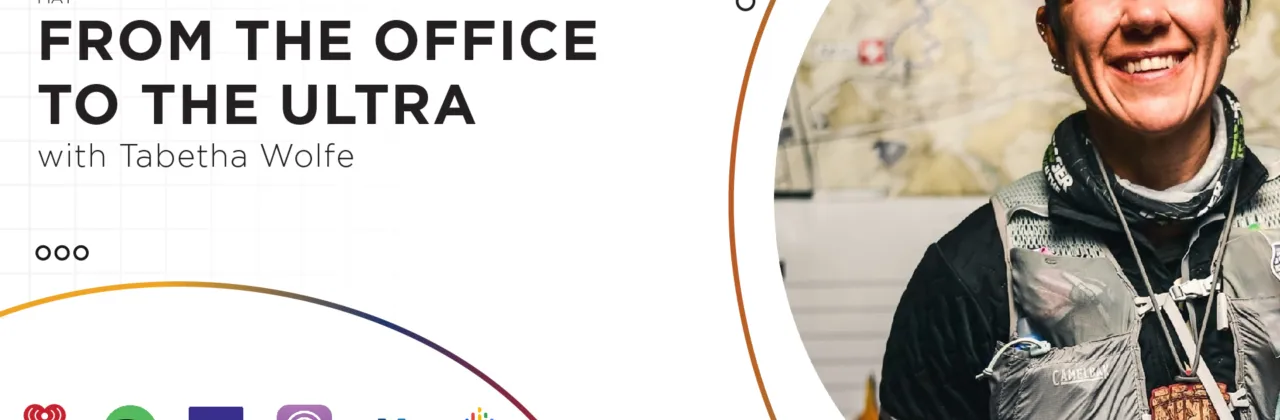
Design & Communications Manager Tabetha Wolfe refreshes our audience with what's going on at Systems LLC and explains what it takes to run a 100-mile race.
Transcript
Colin Uthe:
Welcome to Connected, a podcast about the operations and the people that make up Chamberlain Group. Every summer at Chamberlain Group, the company's wellness program sponsors a 5K in the Chicago land area, where employees are encouraged to end their workday a bit early, finish the 5K at whatever pace they can, and then celebrate afterwards with some food and drink. I've done that race three times, running as much of it as possible, and by the end, I'm thoroughly exhausted, saying to myself, "Well, at least I don't have to do that for another year."
This month, my guest is Tabetha Wolfe from our sister organization, Systems, LLC, who could probably run that 5K in her sleep, and faster than me at that. In her free time, Tabetha and her family run Ultramarathons, which if you're not familiar with, she'll explain later in this episode, but if that sounds kind of scary, that's because it is kind of scary. Join me as I listen to Tabetha reflect on how this influences both her work and her personal life.
Tabetha Wolfe:
I am Tabetha Wolfe. I am the design and communications manager at Systems.
Colin Uthe:
For listeners who do not know, tell me a little bit about what Systems, LLC does.
Tabetha Wolfe:
Systems is a manufacturer of loading dock equipment, and loading dock equipment is... You'll find that in warehouses, grocery stores, those types of places. It's a piece of equipment that bridges the gap between a semi-trailer and the warehouse floor.
Colin Uthe:
A really essential supply chain end point.
Tabetha Wolfe:
Yes.
Colin Uthe:
It sounds like just about anywhere there's a truck dropping something off, there's a loading dock getting that truck in there.
Tabetha Wolfe:
Absolutely. It's the one piece of equipment you need to move any product in and out of a semi-trailer.
Colin Uthe:
Yeah, it's like an unseen necessity-
Tabetha Wolfe:
Yes.
Colin Uthe:
... in a lot of our daily lives that I'm sure many people don't think about. But you guys make a lot of them too.
Tabetha Wolfe:
Yes.
Colin Uthe:
You guys have a pretty crazy output for... And you're a lean operation too, if I'm not=
Tabetha Wolfe:
Yeah, we have facilities in both Arkansas and Germantown, Wisconsin.
Colin Uthe:
You guys have been going steady for a long time, if I'm not mistaken.
Tabetha Wolfe:
1961.
Colin Uthe:
Okay. And in 2017 is when the relationship between Systems and Chamberlain Group started. Could you tell me a little bit about how systems fits in with Chamberlain Group?
Tabetha Wolfe:
Yeah, so Systems provides a really great hardware with the loading dock equipment, and Chamberlain has been trying to get into that space with their software, and by partnering the two together with MyQ Enterprise, this allows for them to get into different warehouses with that software and provide seamless integration.
Colin Uthe:
Yeah, that's true. So this year, one of Chamberlain Group's biggest goals is to establish themselves more in the loading dock facilities that our hardware may be part of, but making sure that those doc levelers, door openers, are all married within our software that we're starting to roll out. Tell me a little bit more about what you are responsible for day to day.
Tabetha Wolfe:
So my days are never the same. My title is design and communications. For the design aspect, I am in charge of all of our graphics, advertisements, literature, and just making sure that the PowerPoints are what the salesmen need. So, that's kind of on the design side. And then on the communications side, that's a newer role for me that's kind of morphed in the last two to three years.
I'm in charge of all the internal communications, and I help with external communications, and I also do all of our employee engagement events, whether it's helping plan it, or taking the lead on it. So, yeah, I kind of have my hand in everything at Systems.
Colin Uthe:
You really do. Yeah. Sounds like anything that involves getting a message out in some way, shape, or form, Tabetha is involved with it. That's a lot to juggle. I've heard that you are outstanding at all of the jobs that fall under you, and so much so that you were awarded a Chamberlain Group MVP Award earlier this year, which, for anybody who does not know, is one of our highest forms of recognition within the company. And it's a big old surprise and celebration afterwards during our quarterly town hall. So, congratulations to you for that. How does it feel to receive an award like that?
Tabetha Wolfe:
Unreal. It was definitely something I had never thought that I would receive. I still don't have words for it, because I mean, I go to work, and I do what I do because I love doing it, and I just want to make sure people have what they need at work. They enjoy coming to work, and knowing that other people value what I do is kind of... I don't know, a shock. I'm not-
Colin Uthe:
It was all your team that nominated you, was everybody working in proximity with you, so obviously they appreciate you very, very, very much, and so does leadership within Chamberlain Group too.
So, when you're not juggling about six different responsibilities at one time within systems, how do you spend your free time?
Tabetha Wolfe:
Oh, my free time is the gym, running in nature, and trying to spend time with family.
Colin Uthe:
At a running pace, obviously?
Tabetha Wolfe:
At a running pace. Yeah.
Colin Uthe:
It sounds like a lot of your free time is spent in motion.
Tabetha Wolfe:
Yes.
Colin Uthe:
You're incredibly modest about it, but I do know that you are a crazy-long endurance runner. And, if I'm not mistaken, you are getting ready for a hundred-mile race later this year in September.
Tabetha Wolfe:
I am. I am running the Superior 100 miler in September up in Minnesota.
Colin Uthe:
That is ridiculous, in the most flattering way I can phrase it, haha. How did you get involved with this sort of thing?
Tabetha Wolfe:
Long distance running started out as, well, we started out doing OCR racing, which is obstacle course racing.
Colin Uthe:
Okay.
Tabetha Wolfe:
My brother came to live with us 10 years ago. He is a recovering alcoholic, and our way of getting him to do something other than just sitting at home was, "Let's go to the gym." And then we started running, we did obstacle course racing, and then it was like, we need... What's next? So, we signed up for a marathon and finished the marathon and we're like-
Colin Uthe:
Wait, how long was the obstacle course race? Was it like a 5K level? Was it like 5K or was it like a hundred yards? And you said, "Let's do 24 miles."
Tabetha Wolfe:
Well, when you're with my brother and my husband, it is "Okay, let's sign up for the longest one they have." So we did sign up for an eight-mile obstacle course race.
Colin Uthe:
Eight-mile obstacle course race?
Tabetha Wolfe:
Yes. And then we later that year went down to Dallas, Texas and did what they call their "ultra", which was, it was a 24 miles I think it was?
Colin Uthe:
That's a whole marathon length, right?
Tabetha Wolfe:
Yeah.
Colin Uthe:
Yeah.
Tabetha Wolfe:
So we figured, "We can do an obstacle course race, why not just go run a marathon?" So we ran the Lake Front Marathon, and that's kind of what sprung the whole ultra-running.
Colin Uthe:
So, the reason you started it in the first place was to sort of support and occupy a relative's time?
Tabetha Wolfe:
Yes.
Colin Uthe:
And then you just sort of took it. So, is the rest of your family still following suit with these challenges?
Tabetha Wolfe:
Yes.
Colin Uthe:
Who else is doing the a hundred-mile race then?
Tabetha Wolfe:
Well, so my husband and my brother and I have all done a hundred miler now.
Colin Uthe:
You've done one before?
Tabetha Wolfe:
Uh-huh, I have. So yeah, we all train together and it's fun. My brother has a dog now, so we've added the dog. But, I would say... I'm going to brag a little bit about myself here in a minute.
Colin Uthe:
Oh, you're allowed to.
Tabetha Wolfe:
So in my ultra running, I think my biggest accomplishment I would say is when I ran for MS Run the US, where that took training time, and it also took time for fundraising. I had to fundraise $10,000 in order to do this, and I ran... My segment was 208 miles. So I ran from Barstow, California to Las Vegas, Nevada. So, not only did I have to do all the training, but I was doing all the fundraising.
Colin Uthe:
You're doing door knocking and asking people-
Tabetha Wolfe:
So, I ended up fundraising $15,000, and then I completed my 208 miles, and it was all for multiple sclerosis, which my mother-in-law has. And that was the reason why I did it. So, that was a big push for me then to, "Okay, I can do a marathon a day for eight days. I'm going to go do a hundred miler."
Colin Uthe:
So, it sounds like what motivates you, and feel free to correct me, but it sounds like the motivators here are, if there's a family member that could use the support, that's sort of the spark. But also, it sounds like you're just asking yourself, "I could probably do this. I think I could make it happen."
Tabetha Wolfe:
Yeah, I would agree with you.
Colin Uthe:
And you said that was 208 miles?
Tabetha Wolfe:
Yeah.
Colin Uthe:
How do you train the human body to not crumble into dust after the first marathon length after this?
Tabetha Wolfe:
It's all about recovery. So, you go out and you run, but when you come back, you're taking care of yourself. You're making sure you're eating, and you're drinking enough. I mean, I sat in a ice-cold bath after running each night, and then doing... Rolling out your muscles and making sure you're stretching. And, I guess, I'm also a person... I'm not a very idle person, so it was still going out, and we were hiking places.
And for me, it's all about staying active and moving, and I feel like your body just follows suit with that then.
Colin Uthe:
Like, if you create the habit, your body just manages to keep up with it?
Tabetha Wolfe:
Absolutely. Absolutely.
Colin Uthe:
What's the starting point? Do you just sort of promise yourself you're going to make this goal, and you just keep on working towards it until you start hitting that goal regularly?
Tabetha Wolfe:
Yeah. I mean, I go through ups and downs with all of that, with training. Right before I decided to do this hundred miler, I was kind of in a stagnant place, and I just decided, you know what? I need to do something, and if I put it on the calendar, it is that spot that I know I need to get to.
Colin Uthe:
What does a week look like training for a race like this?
Tabetha Wolfe:
I don't run every day. I run three to four days a week, and during the week, I run four to five miles during the week, because that's what time and light allows me to do. But it's all about the other little things I do too. So, I go to the gym three days a week. I'm lifting, I am doing my stretching, just to work on my hips, and my back, to be able to carry my pack for a hundred miles. And then, on the weekends, that's when I do more of my distance running, get up in the morning and go run eight miles.
Right now, I'm not running long miles. I'm building myself up to those miles, but we'll go hike
Colin Uthe:
You're ramping up to it?
Tabetha Wolfe:
Yeah, ramping up. So, you start low and then aim high.
Colin Uthe:
Tell me more about how does the race actually work? You said you're carrying a pack, and I'm assuming that is food, water, bedroll? Do you take a break at all? Do you-
Tabetha Wolfe:
Haha! No.
Colin Uthe:
What's the pacing?
Tabetha Wolfe:
So, there's eight stations every... Some races are every five miles. I haven't really looked at the map fully for this race yet. I carry a vest with water bladders in it, and then I do keep some snacks on me. But, when I come to the aid station, they always have food for you. So, for this race, my husband and my brother will be crewing me.
So, they'll be at the aid stations, and they'll get me what I need, and they'll have things in the car.
Colin Uthe:
They're just going to drive from station to station and meet you?
Tabetha Wolfe:
Yeah.
Colin Uthe:
Okay.
Tabetha Wolfe:
I try not to carry too much with me. Basically essentials, because the further in the race you get, the heavier your pack becomes, even if it's just water. Yeah, the aid stations are usually fully stocked for you. Once you get later into the race, you can get a cheeseburger-
Colin Uthe:
Oh, nice.
Tabetha Wolfe:
... or whatever you want. So later in the race, usually around 60 miles or so, then I can pick up what they call a pacer, so somebody to run with me. So, my brother and my husband will run miles with me as well to keep me moving.
Colin Uthe:
Oh, okay, like coaching you kind of?
Tabetha Wolfe:
Yeah.
Colin Uthe:
Okay. They're with you in the slump trying to get you over your wall?
Tabetha Wolfe:
Yep. Nighttime is hard.
Colin Uthe:
Yeah. Okay. And that was going to be my next question. How long is this expected to take?
Tabetha Wolfe:
So, this race, my goal is to finish in under 36 hours. This race is significantly harder than my first hundred miler.
Colin Uthe:
Why is that?
Tabetha Wolfe:
There's a lot more elevation change, and the trail is much more technical.
Colin Uthe:
Okay. Define technical.
Tabetha Wolfe:
Technical would be rocks, and tree roots, and-
Colin Uthe:
Oh, is it off road for most of it?
Tabetha Wolfe:
Yeah. So, this is all trail running. So, to put... That's what all my ultra running basically is, is trail running. So-
Colin Uthe:
Well, at least you get some foliage over you.
Tabetha Wolfe:
Yes.
Colin Uthe:
But you can hurt yourself-
Tabetha Wolfe:
Yes.
Colin Uthe:
I mean, beyond endurance, you could trip.
Tabetha Wolfe:
Oh yeah, for sure.
Colin Uthe:
That's kind of scary.
Tabetha Wolfe:
Okay. It's a mindset, for sure. So yeah, nighttime gets harder, because you're tired, and your feet start dragging, and those rocks and roots become much more prevalent.
Colin Uthe:
And I'm sure the path isn't lit either. You probably just... you have a flashlight on your head? Is that-
Tabetha Wolfe:
You have your headlamp, or your waist belt, and that's your light for the evening.
Colin Uthe:
You'd be wearing a GPS, I imagine?
Tabetha Wolfe:
Nope. No, not on this race. Nope.
Colin Uthe:
Just, if you get lost, that's just like-
Tabetha Wolfe:
Yep, you're lost.
Colin Uthe:
That's it.
Tabetha Wolfe:
No, this race is pretty, it's on the Superior hiking trail, so it's pretty well-marked. It's a pretty well-marked trail, so there's not a lot of ways to get lost, I guess.
Colin Uthe:
Are you going to be keeping up with a lot of other people or you think you're going to be by yourself for most of it?
Tabetha Wolfe:
Since this one's point to point, I'm not really sure what to expect. When I did my previous one, that was on a 20-mile loop course, and you kind of ran into people-
Colin Uthe:
Oh, so you're lapping each other.
Tabetha Wolfe:
Yeah, you kind ran into people periodically.
Colin Uthe:
That doesn't sound as fun as from one point to another. You don't get to see the same thing at all.
Tabetha Wolfe:
Well, I don't know. When you're running, every time you go around a loop, you notice something different.
Colin Uthe:
Oh, okay.
Tabetha Wolfe:
So, 20 miles is about the shortest I would do for a loop course, because... But yeah, so most of the time I'll be by myself unless I can hook up with somebody early on in the race that's running the same pace as I am. But, in ultra running, you never know what's going to happen.
You can start with somebody, and somebody's wheels fall off, and it's one of those where you just keep moving, and you hope the other person catches up with you later, kind of thing. But that's the understanding and that world of ultra running.
Colin Uthe:
Yeah. And I'm sure it's not competitive based either.
Tabetha Wolfe:
No.
Colin Uthe:
I'm sure people are going to run at their own pace, and it's not like a heartbreak if they go ahead of you, or you go ahead of them. I didn't really think about it, but it sounds like doing one of these is way, way more challenging without a pit crew, without a team.
Tabetha Wolfe:
I would say yes, and I give total props and kudos to people that go out there and do these races self-supported, because having my brother, and my husband, and my other friends that come do this, it's like a community, and I just love having people around while doing it. And maybe one day I'll try to do one self-supported and see where I get.
Colin Uthe:
I mean-
Tabetha Wolfe:
Next challenge.
Colin Uthe:
Yeah. I don't know. Yeah, unless you get a million dollars in a medal, I don't know. I'm not sure if it's worth it. It sounds like having that team, it lifts your spirits as well as just keeps you safe too. Do the tables ever turn for your husband or your brother? Are you ever on the supporting side of one of their races?
Tabetha Wolfe:
Yeah, absolutely. Crazy. My brother did a 200-miler in the... I believe the Cascade Mountains. That's over by Mount St. Helen's, right? Is that what those mountains are?
Colin Uthe:
Sure, yeah.
Tabetha Wolfe:
Over in the mountains. So yeah, we were on logging roads, and that was a point to point. So yeah, we have a group of us and we just travel around the country doing this stuff because we love doing it, and we love hanging out with the people, and it's kind of crazy. You see a lot of the same people at some of these races, so it's kind of a small-knit group that you see at races. It's fun.
Colin Uthe:
You have a rival?
Tabetha Wolfe:
No.
Colin Uthe:
Nemesis?
Tabetha Wolfe:
Myself.
Colin Uthe:
Yeah?
Tabetha Wolfe:
I mean, that is... When I'm out there, I have zero expectations when I go into a race. I'm out there. I have a number in my head on when I want to finish. Like I said, with this race, 36 hours. The goal is to beat it. If I don't, you know what? I showed up, and I went out there and did it, and that's really all that matters.
Colin Uthe:
More than most can say.
Tabetha Wolfe:
Yeah.
Colin Uthe:
What do you get out of this? Why do you keep on registering for these races? What do you get out of running?
Tabetha Wolfe:
Biggest thing I get out of it is... it sounds so cliche, but to prove to myself that I can do hard things.
Colin Uthe:
I mean, folding your laundry must seem like the easiest thing in the world if you can do something like this.
Tabetha Wolfe:
Now, I would say it's more of a peace, the solitude. I mean, I know I do a lot of my training with my husband and my brother, but just the peace of being out there and being in my own thoughts, and not worrying about what do I got to do next? What's the next project?
It used to be, where do I got to get my girls? Where do I got to be next? When I'm out on the trail, it's just, I'm just there.
Colin Uthe:
Yeah, just-
Tabetha Wolfe:
I'm just being-
Colin Uthe:
Yeah, you really can't afford to think about anything else either.
Tabetha Wolfe:
Nope.
Colin Uthe:
That's just what you're doing in that moment.
Tabetha Wolfe:
Yep.
Colin Uthe:
That's pretty cool.
This is, without a doubt, a major part of your lifestyle. I don't think anybody would argue that. It sounds like a lot of things that you need to do to keep up with this lifestyle really bleeds into your daily life. You can't win at this, the level that you do, without implementing that. So, tell me a little bit about that. I want to hear how do you think your endurance training surfaces in your daily life?
Tabetha Wolfe:
I guess, bringing my training for an ultra, and my work life, and my life in general, discipline, it's a big thing. You need confidence to go out and run a hundred miles. But you also need confidence when you're at work.
If you're not confident in what you're doing, you're not going to do well at it. And I mean, that applies to both things. The other thing I would say is risk. Going out and running an ultra, you're taking a risk every time you're out on the trail. Like we were talking about before, the trails are technical, and I'm out there risking spraining an ankle every time I'm out there.
But at work, taking risks is, I would say, part of work too. If I didn't take some of the risks, and ideas, and challenges that I've had, I don't think I would be where I am with systems. So, taking those things, and the confidence, and the risk taking, has allowed me to grow my career.
If you're not willing to do that, you're just going to stay flat, and I feel like that's where I am with my ultra running, as well, and my life in general. I mean, risk taking is a big part of all of that.
Colin Uthe:
What sort of lessons have you learned from racing that can be applied to both your work life and your personal life?
Tabetha Wolfe:
Failure.
Colin Uthe:
Failure. Okay. Tell me more about that.
Tabetha Wolfe:
You're not always going to go out there and have the best race of your life, and that can be applied to every portion of life. Not every day is going to be your best day. It's what lessons you learn from that, and apply those to the next challenge. There's been plenty of times in both running, work, life, that things don't go the way that I want them to. You can either let it knock you down, or keep going, take those lessons and run with them.
Colin Uthe:
What advice do you have for other people who may be looking to push their limits, who may be looking to take more risks, and be more bold in their workplace and their personal life? What advice do you have for them?
Tabetha Wolfe:
My advice would come from something that I heard Tom Robin tell us in a meeting, that people need to stop waiting to be told what to do next. Just go out and do it.
Colin Uthe:
Reminder that you have free will.
Tabetha Wolfe:
And I 100% agree with him. And it was an aha moment during that meeting, that I need to just start doing what I know is right. And it's not that I don't do that, but sometimes you just need that reminder, that you need to just go out and do it, and you'll figure it out from there.
Colin Uthe:
Not waiting around for permission.
Tabetha Wolfe:
Yep.
Colin Uthe:
Tabetha, thank you again so much for coming into the office and sitting down. I know it was a bit of a hike for you, because you're not in the Chicago area like a lot of our guests are, but I really appreciate it. You didn't have to run all the way here, but I know you're trying to set an example. So, thank you for that. Well, thank you again. Appreciate it.
Tabetha Wolfe:
Thank you for having me, and I'm glad I could share a little bit of my story.
Colin Uthe:
Thank you for listening. Tune in next month to hear more stories of how all of us at Chamberlain Group are connected. This episode was written, recorded, and edited by me, Colin Uthe. Our producer is Jim Kozyra. Our music was provided by Soundstripe.com.
Related Insights
Opening Doors and Getting Involved In Our Communities
"Safety Is Our Way of Life, Always"

Human Resources with Juli Prizant and Edwin Giboyeaux
Contact Us
If you're a member of the media and you'd like to get in touch with our Communications team, please fill out the form below.

