Controlling Your Real Front Door with the myQ Video Keypad

Jon Lee (VP, Experience Design & Creative) and Marion Burlak (Director, Product Management) discuss their roles within Chamberlain Group and recall their involvement with developing CG's latest myQ innovation.
Transcript
Colin Uthe:
Welcome to Connected: a podcast about the operations and the people that make up Chamberlain Group. By this point, it's probably no surprise that we're making a huge effort to transform Chamberlain Group from a hardware-based company into software and services, primarily through our access control app, myQ. From the myQ app, you can see the state of your connected hardware, but also control it. And in the midst of our transformation, the catalog of what you can connect to myQ is getting bigger. On this episode, I'm speaking with Marion Burlak and Jon Lee, who both played a huge role in the launch of our latest myQ product, the Video Keypad.
Marion Burlak:
So I'm Marion Burlak, director of product marketing over emerging products. So oversee the connected myQ portfolio, Video Keypad, Smart Garage camera, the Yale lock as well, and then some other cameras that we have on the roadmap.
Colin Uthe:
Okay. So pretty big portfolio of-
Marion Burlak:
Yes.
Colin Uthe:
And it's all residential?
Marion Burlak:
It is all residential.
Colin Uthe:
Okay.
Marion Burlak:
Yep.
Colin Uthe:
Okay. And you've been here about a little over two and a half years.
Marion Burlak:
Exactly.
Colin Uthe:
Awesome.
Marion Burlak:
Yeah. It'll be three years this winter.
Colin Uthe:
Walk me through what your career path has been here so far.
Marion Burlak:
Oh, wow. Yeah, I've had some great opportunities since joining Chamberlain. I actually started in Adam Solomon's team under NextGen sales, and that was a voice of customer and NPD role, really a support role for the NPD process tied to our professional sales channel.
Colin Uthe:
Okay. And that's just our overall new product development methodology?
Marion Burlak:
Correct, yes, exactly. So trying to tie in the sales team closer to new product development. I was in that role for about eight months and then moved to RBU overseeing the core accessories. So you think of our traditional transmitters, our traditional keypads, remotes, overseeing that portfolio, and then was group product manager, and then moved to the director role in April of '22.
Jon Lee:
My name's Jon Lee and I lead the design staff here at the Chamberlain Group. And what that really means is all of the industrial design team, the UX team, and the market and creative design team roll into me. So part of my team works very closely with Marion's team on how we design experiences around physical product. And the other part of my team works on how we create creative content that really helps us effectively go to market with new products.
Colin Uthe:
And that's a relatively new organizational structure, right?
Jon Lee:
It is. I'm kind of breaking the mold here. So I have two roles. I came from the experience design side of things, and I recently took on responsibilities for the marketing creative design staff. So I have two bosses. Yay. It's awesome.
Colin Uthe:
Everyone's favorite thing.
Jon Lee:
And we're starting to kind of figure out how we work together as a team and we're figuring that out. But it's a lot of fun. And I just think that, I love when you can harness creative designers. I love being a designer. That's kind of where I came from. So it's just you're solving a problem with how you reach and communicate with people or you're solving a problem and how people interact with a product or solve a specific problem.
Colin Uthe:
Jon, I'm seeing that you've been here for almost 11 years.
Jon Lee:
Yeah.
Colin Uthe:
Does it feel like it?
Jon Lee:
Crafty veteran, I guess you could say.
Colin Uthe:
Crafty veteran.
Jon Lee:
Yeah. I started here again as an industrial designer. I moved upward to kind of manage that team, and then the Chamberlain Group allowed me to take a bunch of sideways steps that were other avenues of growth for me. So spent time in marketing, spent time in global innovation, spent time in connected services. And now back to leading the design staff.
Colin Uthe:
Tell me a little bit about how the two of you work together on a daily basis.
Marion Burlak:
So as soon as I inherited the emerging products team, I learned very, very quickly that Jon and his team will be critical partners for my product managers. And as we move through the new product development process, working with Jon's team is absolutely the utmost importance from identifying what that problem is all the way through designing a solve for the problem. So it really is a joint effort between, well, these are the problems that we think are there, and then we'll come with some market research on "yes, this actually is a problem," one that we think that we can solve and is large enough, and the market is big enough that we think we can go after it and really come up with a good solid business case, but we have to work hand in hand from day one.
Jon Lee:
Yeah, I think design likes to jump into projects very early, and that first kind of initial jump in is really about understanding the problem with a ton of depth. And we often kind work in that space collaboratively just by making sure that that problem is real and exists, and there are inklings of a solution that we can kind of bring to the table. And that's early phase concept ideation. Sometimes we do that as a team, sometimes we actually do that with end users to kind of make sure we're steering ourselves in the right direction. And then as we kind of get into the design process, which is we're actually, we feel really good about the problem. We feel really good about our solution. Now, how do we make that solution come to life? How do we make sure it's on brand for our products? How are we making sure that we can make it within our realm of capabilities and ultimately move forward with something that we can, and as Mary said, is a viable approach for us to kind of develop at the end of the day.
Colin Uthe:
And the most recent collaboration that you've had is with the new Video Keypad, correct?
Marion Burlak:
Absolutely. So if you can recall the, we call them legacy keypads, that gray keypad that Chamberlain group has been making for-
Colin Uthe:
Tried and true.
Marion Burlak:
... decades. Tried and true. It is reliable, it is dependable. It is the world's bestselling garage keypad. How do we bring it to the 21st century and how do we expand what it means for homeowners? So right now it's just the pin pad that they enter their pin into to open the garage, but how do we provide visibility to the most used entry point in single family homes that have an attached garage?
Colin Uthe:
It's a very valuable endpoint.
Marion Burlak:
Absolutely. And it hasn't been solved for by some of these other big names in the space. There's a video doorbell, many video doorbells out there. They really took a hold for that space for the front door. But the garage space was really overlooked up until now. So this is the predominant entry point, entry and exit point in the home. And we wanted to ensure that homeowners, in particular, parents with mobile children, so school-aged children that are coming and going, we wanted to provide them both the visibility and control over that entry point that didn't exist.
Colin Uthe:
Statistically speaking, it is the most used entry point for homes with attached garages.
Marion Burlak:
Its 70+% of families use the garage as their primary entry point into their home. And it's not just for vehicles. The same holds true for pedestrians as well. So with an attached garage, you have 70% as primary entry point with a car, but even for children, and you take your bike out or you go for a walk, still 60+% are using the garage door as primary entry.
Colin Uthe:
I want to hear the story of how this product came to be developed and where you fall into that. So Marion, I understand that you were handed this project in a somewhat early stage of developments.
Marion Burlak:
Yeah, so I took the project over right before D3, which is the part of the new product development process where everything's coming together, it's solidifying, you're making solid commitments around launch date and business case and commercialization. So took it on from that point and then worked with the plan. There was a lot up in the air, there was a lot of elements that still needed to be fleshed out. So then it became all about execution and bringing the product to market.
Colin Uthe:
And beyond even the technical why's, you still had to establish the experience why's, the philosophical "why would somebody buy this?"
Jon Lee:
Yeah. I got involved very early on in this program in the initial phase. So we call this the discovery phase where we're still trying to frame what we want to do, and we uncovered some pain points around home access. Again, we're deeply committed to making home access more simpler for the average American. And we found things like parents struggle to understand when their kids come and go or when they get home from school or soccer practice or something like that.
We found problems like "I need to get a neighbor in to let my dog out because I'm not going to make it home in time." And the ability to just share access is relatively unsecure. You have to give a code to your home, or you maybe have to give them a key, or you have to tell them where your hide a key is. So this idea of access and the information on access, we found very early on could solve some of these problems. And we looked at some of our product formats and we said, "Hey, the keypad is actually something that you could kind of put in between users and these problems and make some meaningful headway against solving them."
Colin Uthe:
So with any product, obviously there are going to be obstacles that come up during the development. I'm told that battery life of the product was a huge hurdle in itself, and it's something that we needed to overcome before the project could continue.
Marion Burlak:
Yeah, absolutely. So as I mentioned, this was our first battery-operated camera device that we were bringing to market. And with that, we had to ensure that the firmware working with middleware and software provided the longest battery life possible for the homeowner. This was critically important. It was a requirement from day one, and we wanted to make sure that we could provide what they need. In our first rollout of testing the battery life came in much shorter than requirements and where we needed to be. And the work that our engineering team did in order to bring the battery life up, I think we saw about a 10x improvement in battery life.
From our initial testing to when we launched was absolutely incredible. It was all data backed work that they were doing. They were iterating. They would make an adjustment in firmware, they'd roll it out to our testers the next day they would test, they would see, "Okay, yes, that motion sensitivity worked. Oh no, that didn't, that actually hurt the battery life, so we're going to take that off and we're going to try something else." But it was just constant iteration to bring the motion sensitivity, the sensors. So there's a tremendous amount of work. Everything kind of had to click and work together, and we were able to improve that. Again, 10 x, and right now we are at a, I'd say, industry-leading battery life for the product.
Colin Uthe:
And it's not something that we ever, it was a hurdle because it's something we never really had to solve for in the first place. But that's also really fantastic news that we had the resources to fix it. It wasn't like a scramble. It was just like, "Okay, we got to put people here to solve this problem."
Marion Burlak:
Exactly. And then it also allows us to take a platform approach for future products. When we look out at the roadmap, this isn't going to be our last battery powered product. In fact, it's the first of many that we have coming down the line. So the work that we did for Video Keypad to ensure that we got maximum battery life, we can apply that to all of the other battery products that are coming and that are in the pipeline right now and help and aid with the development process, the development time, and again, ultimately ensure that we're providing the longest battery life possible to our homeowners.
Colin Uthe:
Right. And as far as testing this, because you had mentioned that we did a lot of testing and a lot of different scenarios to solve for this big issue. I heard that we were able to leverage a lot of employees' homes to kind of recreate some of those different scenarios. Is that right?
Marion Burlak:
Oh, yeah, absolutely. It was really important that we got a variety of locations. We wanted to test different activity levels, so that's really important for battery life, but then also just how the product functions in general. So we needed to make sure that we had some driveways with minimal activity, some driveways that were very busy. We needed to make sure that we had cold weather climates and some that are more humid and some that are dry, because we just wanted to ensure that we could test in every environment and in every scenario and situation. So a huge thank you to so many people in the organization, so many employees that helped us with that and had the keypad up and running on their garage from day one.
Colin Uthe:
All right. Well, thanks everybody for being Guinea pigs. Appreciate it.
Marion Burlak:
Yes, exactly.
Jon Lee:
And specifically around the battery aspect of this, we always do robust alpha testing and user testing with our products. But when we learned about some of the battery life related issues, it was pretty much an all hands on deck testing regimen. So we had, again, as Marion said, tens of families and different types of households living with the product reporting data back to us sometimes on an hourly basis from a battery standpoint. So the team really rallied around solving that problem in one of the later stages of the development process. But sometimes that's what it takes.
Colin Uthe:
At this point we're through with development, we have ourselves a working, fully-operational, maybe not packaged, but fully-operational Video Keypad. How do we start selling this?
Marion Burlak:
So we took a channel by channel approach. We have this great app, this great website, so how do we make sure that we're informing all of our myQ audience that we have this product available? So the direct to consumer approach was a big part of the commercialization plan and really making sure that we have the messaging right, because again, new to the world, so no one knows what a video keypad is, so how do we-
Colin Uthe:
Yeah, you can't really compare it to anything.
Marion Burlak:
Right. Exactly. So how do we explain what the product is and what the problem is that it's solving?
Jon Lee:
And to build off that, we really innovated that experience as well with Video Keypad. So as millions of myQ users became aware of it, we wanted to make sure that when they found out what it was and they were thinking of purchasing it, we made that super simple for them.
Colin Uthe:
How simple did we make it?
Jon Lee:
Well, I'll tell you, Colin, for the first time ever, we offered basically our myQ users to purchase directly from the app. So we built out a native purchasing experience. You don't have to leave the app or go to a website. We built an in-app product display page, and we also implemented digital payment systems. So you can use your Apple Wallet or your Google Wallet to pay for it. So basically we offered a two click experience to purchase the product directly from the myQ app.
Colin Uthe:
It's ridiculously intuitive.
Jon Lee:
Totally.
Colin Uthe:
It makes sense.
Marion Burlak:
And then very similar to some of the other aspects of this project is we did this for Video Keypad, but then it's useful for all of the other products in the roadmap, those that we're currently selling, at least on the myQ side of course.
Colin Uthe:
You're selling the hub the same way now, right?
Marion Burlak:
Yeah, so the Smart Garage-
Colin Uthe:
The smart access hub.
Marion Burlak:
... Control, and then also the Smart Garage Camera, both in app. It is seamless, and we'll be able to use the same technology for all of our future launches and then taking those learnings and applying them to the rest of the roadmap.
Colin Uthe:
I wanted to go back a little bit because Marion, I think you had mentioned making sure that we're understanding why someone would want to have this in their home, but telling the right story along with it. Could you tell me a little bit about that?
Marion Burlak:
Yeah, so I think the best example that I have is I was traveling with the retail sales team, who I just have to say they did such a great job in some of these pitches over the past 12 months. So I was traveling quite a bit with them, meeting with the merchants at various retailers and would position and I would give the pitch and I would intro it and talk about it for a couple of minutes. And they all absolutely loved it. There was one merchant in particular that this just resonated so much with me, and I went through, it was like a 90 second pitch on the product, and he said, "That is absolutely great. I love it. You have sold me. I want 10 of them, but you're not going to be in my store to pitch this product." So how do we ensure that that message on the box resonates with shoppers? How do we tell that story within three seconds?
Colin Uthe:
Again, not really a problem we've ever had to solve before, right?
Marion Burlak:
Correct. Right. Because people, if you're shopping for a garage door opener, you know what you're looking for.
Colin Uthe:
Yeah. You know why you're in there.
Marion Burlak:
You're going in there to buy a garage door opener. And again, we're in different sections now, so we're in "Smart Home," and the shopper may not have garage on the top of their mind, and they need to know what the product is. So we spend a lot of time and are still, again, still iterating and still taking learnings and still making adjustments in various retail displays, but all about how do we tell that message within three to five seconds.
Colin Uthe:
And Jon, you helped out with the development of that marketing, right?
Jon Lee:
Yeah. So again, we rallied around this message, keep eyes on your real front door. And that really stemmed from, again, the insight we found that the driveway in the garage is just a very busy place for homeowners that have an attached garage. So using visuals of kids coming and going through that access point, making sure that the visuals had a strong correlation to the software experience. So if you can picture a kid coming through the garage or having their hand up to the keypad and then seeing the myQ app pop a notification saying that that specific kid or child came home, we really rally around those kind of visual assets to tell the story, as Marion said, in a very brief time span.
Colin Uthe:
Why do you think it is that this product stole the spotlight this year over anything else?
Marion Burlak:
Yeah, so again, I think because as we said earlier, this is new to market, really solving some fundamental pain points that had not yet been solved. Not only do we think it is going to be the flagship product moving forward for myQ and for Chamberlain Group, but really provides almost a gateway into the myQ ecosystem, right? And for homeowners or shoppers that may not be familiar with myQ yet, it allows them to experience so much of what myQ has to offer in one product.
Jon Lee:
I think to build on that, it also really was the foundation for making some critical myQ platform advancements for us. So prior to Video Keypad, myQ was used for opening and closing your garage door from our smartphone app from anywhere, and Video Keypad drove us to build more robust user management features. So we didn't have a pin management system. Now we know specifically who's coming and going by their opening and closing habits on the Video Keypad. We built some very significant and pretty high-tech video capabilities that we're excited to roll out and use forward and other video products and the ability to share access. So again, I talked about that problem around sharing access. With Video Keypad, you can send a guest pass to someone that you need to get into your house and it's super secure and they can use it for one time or a specific period of time. Those are just new to the world foundational elements that now exist in myQ that didn't exist before.
Colin Uthe:
What's the future of this product and where do we go from here?
Jon Lee:
So I think for people that have purchased a video keypad, what they're going to find is that the future is going to unlock some more magic. We are working on a software roadmap that's going to bring new features to this product that will hopefully, again, solve more compelling problems. They're specifically centered around video. So if you think about what a video camera can see and detect, I can't go into specifics, but we're excited about what that's going to unlock. And then I also think there's going to be-
Colin Uthe:
Is that like a play on words?
Jon Lee:
I'm not trying to tell the future, but sometimes-
Colin Uthe:
That's pretty sly.
Jon Lee:
... it just slips out. I don't have a crystal ball or anything. But I think too, the other thing is that the future of this product is also going to center around other products that are going to work with it in tandem and complimentary. Coming from myQ and being a part of the myQ ecosystem.
Marion Burlak:
The future is more about the ecosystem as a whole and what that again, unlocks for people far more than just one individual standalone product. The keypad is certainly the start of all of this, but it is just the beginning. And you think of the power of a keypad with other cameras and other devices all tied back to a garage opener and just it brings so much value when it's a cohesive system that really provides parents this ability to open close control, monitor all of their access points.
Colin Uthe:
Yeah, there's going to be a lot of different opportunities for somebody to get within our ecosystem, and only one of them has to get you in the door.
Marion Burlak:
Absolutely.
Jon Lee:
For sure. Actually, all of our products will get you in the door.
Colin Uthe:
Yeah.
Jon Lee:
They'll just do it in a super seamless and super convenient and super secure way that's hopefully magical and delightful.
Colin Uthe:
Thank you for the plug, Jon. I think that's all I have. Thank you both so much for sitting down with me and chatting about -
Marion Burlak:
I'm happy to be here Colin.
Colin Uthe:
... some new and exciting developments.
Jon Lee:
Yeah, for sure.
Marion Burlak:
Great. Thank you.
Colin Uthe:
Thank you for listening. If you'd like to know more about the Video Keypad, head over to myQ.com/products or simply open up your myQ app. This episode was written, recorded and edited by me, Colin Uthe. Our producer is Megan McClendon. Our music was provided by Envato Elements.
Related Insights
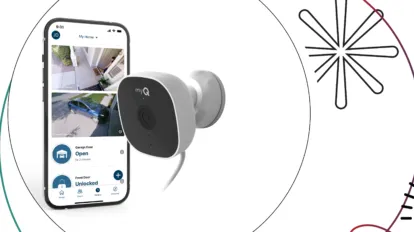
Unlocking the Power SmartSecure with the myQ Smart Outdoor Camera
New Solutions for Multifamily Access Control
10 Million myQ Connections and Counting...
Contact Us
If you're a member of the media and you'd like to get in touch with our Communications team, please fill out the form below.

