The Past, Present, and Future of myQ
Rob Keller and Cas Cate give us a history lesson on the not-so-humble beginnings of myQ, while Mason Mularoni briefs us on an upcoming myQ partnership.
Transcript
Colin Uthe:
Welcome to Connected a podcast about the operations and the people that make up Chamberlain Group.
In the late two thousands, a small team of engineers were assembled to develop a solution for a common problem. It's happened to just about every homeowner at least once you're a few miles down the road from your house, maybe you just sat down for work, maybe you're about to get on a plane and you think to yourself, did I remember to close the garage a few years and a few dollars later, myQ, the Smart Access Solution was born. Since then, myQ has become a lot more than just a way to control your garage door, and it turns out that was anticipated towards the beginning of the platform. On this episode, I'm interviewing Cas Cate and Rob Keller, who were both around at the start of myQ and have seen it through to become what we know it as today. In addition, I interviewed Mason Mularoni, who is managing a new partnership for myQ that we're excited to share.
Rob Keller:
My name's Rob Keller. I'm the VP of Engineering for Connected Products.
Cas Cate:
My name is Cas Cate, and I'm the director of Advanced Engineering with Chamberlain.
Colin Uthe:
You've been with Chamberlain Group how long at this point?
Cas Cate:
I've been here almost 14 years. December 3rd, 2008 was when I joined.
Colin Uthe:
How many different titles have you held since then?
Cas Cate:
Oh boy. Now you, now you're quizzing me six or seven, I believe. I started as a senior design engineer. Then I was a myQ engineering lead during some key years with myQ, and then I did business development for a few years, so myQ bus dev, and then I managed advanced development, and I was promoted to a director in 2017.
Colin Uthe:
Cas's team is responsible for scouting ahead in the world and identifying new technology needs for the business to fulfill. When they find something good, they bring it back to the business and work with other engineering teams to refine that technology and scale it up to production.
Cas Cate:
We're more of the swashbuckling explorers that sometimes come back empty-handed.
Colin Uthe:
Rob's team is responsible for scaling up technology, specifically myQ to tens of millions of users and keeping the lights on at that. When did you come along to Chamberlain Group and when did you start?
Rob Keller:
I joined in 1996.
Colin Uthe:
Okay.
Rob Keller:
I'd had other jobs.
Colin Uthe:
I was born in 95, Rob.
Rob Keller:
That's terrifying, but I don't feel any different. I swear, I feel I feel the same age. We were writing assembly language and storing it on floppy drives, and there was just a couple of us writing code that was embedded in the garage openers. Started as a project engineer. I think I was a project manager at some point there, a manager of electrical engineering, director of engineering. I think I had that job when we started myQ. Cas was running a small advanced engineering. There was a couple other, but that was it. So we had to make it so. We had to make the gateway or to bring it to production. I remember putting people on it and answering questions from the CEO, and at some point, I got promoted to VP. I've had a couple of suffixes on my title and a few different responsibilities change around.
Colin Uthe:
They put you where they need you.
Rob Keller:
Yeah. Yeah, so here I sit.
Colin Uthe:
Rob and Cas are pretty humble individuals, but both of them played a major role in what Chamberlain Group has become and what it's going to become. Since Chamberlain Group's beginning, we've always seen ourselves as a hardware company. It wasn't immediately obvious, but myQ was the catalyst for us to transform into an access solutions company.
Cas Cate:
So MyQ allows you to remotely from anywhere in the world control and monitor your garage door opener. You can share that access with other people. You can get notified right on your smartphone as the state changes, and you can sign up for secure in-garage delivery. At its core, myQ extends the secure and safe control of your garage to your smartphone, but as part of our ecosystem, it allows us to offer other values add services like what we do within garage delivery.
Colin Uthe:
Right about the time that Cas came on board, Rob and his team were solving a problem that opened the door for the myQ platform. You see what I did there?
Cas Cate:
The technology we now call myQ actually started with adding a bidirectional capability to the garage door opener. Historically, for years, it was unidirectional, meaning it could receive a transmitter, but it couldn't share its state, and so we had this bright idea to add the garage door monitor and lights to the ecosystem. The internet gateway it came later. It was actually the third or fourth accessory, but once we had that bidirectional capability and then came up with this idea for an internet gateway, then myQ was sort of born at that point.
Rob Keller:
So as a company, we knew we wanted to do something like this. It was kind of somewhat obvious that we needed to connect things to the internet, our product, and it would be useful. Cas's team was out exploring and found a company that could help us do it for a reasonable cost. And at that point, and then of course sales immediately sold it before we had anything working. I love sales. I'm glad they did it actually, but they did, and so then we had to all band together and make it work.
Colin Uthe:
They didn't know quite yet how big of an idea that they had, but they knew they had something. The myQ platform had great potential from the beginning, which yielded a lot of surprisingly accurate concepts on how the platform would function over a decade before some of them even came to fruition.
Cas Cate:
So schedules Leo, making sure your door was shut every night at 11:00 PM I know that was something we anticipated and push notifications.
Rob Keller:
Having seen where door opens, light goes on, things like that. Those were anticipated as well.
Colin Uthe:
Like automated scenes?
Rob Keller:
Yeah.
Colin Uthe:
Okay.
Cas Cate:
Yeah. Colin, in that video I shared if you pay attention to the individual user stories that are part of that, the geo-fencing, whereas you're leaving your home, your garage sort of triggers the rest of your lights, your locks, your thermostats. That was envisioned in 2009 and video monitoring was envisioned and in-garage delivery was envisioned back then. So we knew we were onto something bigger than just controlling the garage from a smartphone, but all these things would take you years to realize.
Colin Uthe:
The video that Cas is referencing here is from a DVD of some original concepts that sold stakeholders on the idea. If you're a Chamberlain Group employee listening to this, I've posted a link to watch this video from our podcast page in All Access online. It's pretty corny but charming.
Rob Keller:
To me, I was always looking forward to the day where we had the video camera and I could press the video screen, and the door would open and close. Well, now we have it. It seemed pretty farfetched at the time. And Cas and I sat in the back room over in the cave we were working out of, and we were talking to the company that's now part of ours that does the video. And these things seem kind of futuristic, but now it's taken for granted. It's there. It's huge.
Colin Uthe:
We as a company made a very large investment by purchasing a company who specializes in video architecture for that purpose specifically.
Rob Keller:
And various people, Cas and myself included, were looking at options 10 years ago.
Colin Uthe:
Apart from the functions of myQ that were anticipated in its development, what were some surprises that came up either afterward or during the development?
Rob Keller:
It was a surprise to me how much people like their push notifications and how they use that to gain insight into what's going on in their homes when they're not home.
Colin Uthe:
I guess useful push notifications...
Rob Keller:
Yeah.
Colin Uthe:
...they like. Not advertisements from app games that I haven't played in two years.
Rob Keller:
Exactly. It's not Candy Crush. But yeah, that one, and they're adamant about it, the people that rely on them.
Cas Cate:
Yeah. I was going to double down on what Rob said that was the biggest surprise for me. We or originally didn't launch with push notifications. Those came almost a year and a half later, and we originally had email and then we added push. The thing that surprised me the most was monitor outweighs control in terms of its engagement and its prevalence, and it's like 10 times... You monitor the state 10 times as much as you control it, maybe more. And we kind of had an inkling of this early in the smart home that your house has a lot more to say to you than you have to say to it, even as you think about controlling locks and thermostats and these kinds of things.
Colin Uthe:
It's funny that the response you guys gave me for surprise features was actually more around surprise behaviors of how customers would react to it, not how much they would use it. It's just what they saw value in. Do you think that types of behaviors that you guys found, did that drive any enhancements to the service that you guys can think of?
Cas Cate:
I think the going on push and I would say activity log, so enhancing how we show them the history, making that more meaningful with iconography and scrollable. I think that's probably an enhancement that we made after we saw how important the notifications were.
Rob Keller:
Yeah. That's probably right, Cas and I think we've taken it a bit further lately with the video clips linked to the events. I've gotten some feedback from people that have used myQ for a while that they really like that new view we have now with the video GDL where you see a door open, then you have the clip there and they find it very informative.
Colin Uthe:
And it's all within the same app, right?
Rob Keller:
Yeah.
Colin Uthe:
Okay. What is the future of myQ currently?
Rob Keller:
It's a much bigger population.
Colin Uthe:
Reaching out to the...
Rob Keller:
Yeah, I think there's no doubt we're going to be a household name just based on the numbers that we're adding right now.
Colin Uthe:
And that's why we're doing a lot of these partnerships too, right?
Rob Keller:
Absolutely.
Cas Cate:
Yeah. I think when we first launched myQ, we asked for an email address and a password, and that's how you identify yourself. And we didn't even have multi-user, we didn't have guests, so if you and your family wanted to use myQ, you were all using the same login. And in IOT platforms, we think of this in terms of authentication. That's the word we use. How do you know that that person is who they say they are? And as we added partnerships, we added something called O of Two so that we could use other logins from other ecosystems to control myQ. So we started to branch out in terms of identity. And so as we think about our users interacting with myQ through smartphones, through voice assistance, or through connected vehicles in the future, I think one of the things we're really going to have to focus on is identity and authentication. That's going to be a growth factor for us.
Colin Uthe:
Building the brand and leveraging authentication from other accounts is exactly what we're doing with the latest myQ partnership.
This year Chamberlain Group partnered with a small company based out of Arkansas that you might have heard of. They're called Walmart, and they're expanding on their in-home delivery service. To help me understand the details of this partnership, I sat down with Mason Mularoni.
Mason Mularoni:
My name is Mason Mularoni, and I'm a senior product manager within our delivery services business.
Colin Uthe:
Could you give me the gist of what a senior product manager does?
Mason Mularoni:
So in my particular role, so senior product managers tend to run different businesses within the organization. For me specifically, I'm focused on running the Walmart in-home partnership. And so all aspects of it to make sure that we're successful across the board.
Colin Uthe:
So it would be accurate to say that pretty much everything related around this Walmart partnership goes through you or around you at some point, correct?
Mason Mularoni:
Absolutely. Okay. Got my hands in a lot of different pies.
Colin Uthe:
For any product or partnership that we support, we have someone like Mason at the helm to ensure that the business is working to that product's advantage.
Mason Mularoni:
I rely very heavily on matrix management, so I work very closely with our marketing teams, our operations teams. I actually, in this particular circumstance, and we're working very closely with our customer support side of things and obviously with our tech and our product teams as well.
Colin Uthe:
So if I'm understanding correctly, there's not necessarily a whole lot of people on your direct team working on this project, but your main job is to orchestrate the company to work to the advantage of this project?
Mason Mularoni:
Absolutely.
Colin Uthe:
Okay.
Mason Mularoni:
And so I'm the one making sure that all ships are pointed in the right direction that we get a common goal, and that we really run across that finish line and exceed expectations.
Colin Uthe:
Could you briefly describe this service and then where does myQ come into the functionality of it?
Mason Mularoni:
So Walmart has a couple of different tiers. So everyone knows them primarily from their big box stores focused on retail. So Walmart as an organization is highly focused on growing their e-commerce arm because that's the way of shopping in the future. So they have a couple of different tiers, and so there's walmart.com, which everyone has access to. You just kind of sign up and you buy online. Step deeper is Walmart Plus. So I think a vast majority of people are focused on, so this has streaming subscription has gas discounts, it has free two-day delivery, those sorts elements. And so a tier further down is Walmart in-home. And so this one is primarily focused on highly personalized grocery delivery. And so it's essentially getting groceries and packages where you want them in your home.
Colin Uthe:
So could you highlight a couple of key features and benefits to the service?
Mason Mularoni:
Absolutely. Yeah. So it's actually in-homes a really cool service that we're bringing to the table here, especially for the myQ customers. And so the goal of the service is really focused on becoming the modern-day milkman is kind of how we phrase it. And so a big part in value proposition service is really having our customers get to know and trust the delivery associates. So our customers here are going to start to see the same two or three delivery associates. They're coming from the local store. And so really the personalization and the high touch aspect of the services is a fun part that we're really going to be building.
Colin Uthe:
I wasn't sure either if... I was uncertain whether or not it was coming from a warehouse or if it was coming from just one of the local stores so I appreciate you touching on that.
Mason Mularoni:
Yeah. And so a lot of these deliveries are going to be fulfilled from the local store, grabbing the fresh produce directly from the shelves and then bringing it directly to your home, to the place that you want it. The real value that myQ brings to the table here is in-garage delivery. So we enable customers to get grocery delivery packages placed directly in their garage.
Colin Uthe:
Walmart in-home offers a few different ways to deliver your items in your home. You don't have to own a smart garage door opener to use the service, but owning one does make it way more convenient.
Mason Mularoni:
And so a couple other aspects of service, big part here, the delivery associate is actually going to neatly put away all your groceries. So whatever you order exactly where you want it. So whether that is placed within the garage, if you have a garage fridge, they'll actually fill up your garage fridge for you, which is a really neat opportunity to make sure your cold stuff stays cold.
Another aspect, so you're going to get the prices that you see in Walmart, so there's going to be no markups, there's no additional fees, or any sort of added tips within the process. So what you see in the Walmart stores or on walmart.com is what you're going to be getting delivered directly to your home. And a third, an interesting addition too is the accessibility side. So those customers that have difficulty either answering the door for deliveries or even going to the store themselves. And a neat aspect that I haven't seen in actually any other services is that the Walmart associate if you have returns, whether it's something from walmart.com or some of the other services, or even if it's something you bought in-store a couple weeks ago, the associate can pick up deliveries from in your garage even if you're not there, which is really cool.
Colin Uthe:
That is a really cool feature. So as long as you have it boxed up, they'll just walk right up and pick it up.
Mason Mularoni:
Absolutely.
Colin Uthe:
Take it back. I love that. Admittedly, it's a little weird at first to think about someone getting access to your garage while you're not home for this reason, and many others, security, and knowledge are always at the core of myQ functionality through every partnership we maintain.
Mason Mularoni:
We're really taking safety and security seriously with this particular partnership and service. We want to make sure that customers are comfortable with what they're receiving here. And with that, we're adding a couple different elements to the experience to make sure we're building that trust with our customers. So the delivery associates are only going to have one-time access to the garage. So when they're within site line, they're able to open the garage door from their app. They can open it once. They can close it once. Also, these Walmart delivery associates will be wearing vest cams through the entire delivery experience, which is a really cool feature. So they will be filming their entire delivery. So actually they can't open the garage even until they turn on their vest camera. And so at the end of the delivery, after the garage door closes, the customers will get a video, a recorded snippet from the perspective of the associate sent right to their in-home app, which is actually a really neat aspect.
Colin Uthe:
And if a customer happens to have a Chamberlain Secure View garage door opener, they could also see it from that perspective too.
Mason Mularoni:
Absolutely. Right. And so the customers, when the delivery starts, they'll be notified via their myQ app, and so they can watch the delivery live directly from their phone.
So the real exciting part is this is very much a symbiotic partnership. So the Walmart in-home crew gets accessed, obviously to our myQ user base, our several million captive users, but then also it expands the value of the myQ ecosystem to our partners. So Walmart is one of the, if not the largest retailer in the world. And so having increased connection from the myQ side is a huge opportunity for us to grow.
Colin Uthe:
And this goes hand in hand with our campaign to have our customers get connected with the hardware they already have.
Mason Mularoni:
Absolutely.
Colin Uthe:
Right. I'm not sure if it was you or somebody else that I was talking to, but I think it was like a day apart from one another, but someone had said that myQ is one of the biggest brands that nobody knows they have.
Mason Mularoni:
Yeah, you're hitting on it exactly right. And so our lookup campaigns, all of our campaigns to really help essentially transition customers so that they connect their equipment. This is just another awesome opportunity to help drive that customer connection side. So we're doing a whole gamut of marketing campaigns. And so a big part, I think a big opportunity for us as an organization is for customers that have equipment that they straight up just don't know is connected. So they come across the in-home service within a Walmart store and they're like, "Oh, this is cool. I want to sign up. How do I do it?" And then they get home and they look up and they have a myQ device. And so it's the path of least resistance here.
Colin Uthe:
This partnership with Walmart is another chance to engage customers after they've already purchased our product and show them what the myQ platform is capable of. If a customer doesn't have a smart garage door opener and they sign up for Walmart in-home with a free trial, they can have a smart garage hub professionally installed at no additional cost. What's a department within Chamberlain Group that you didn't off the bat expect you'd have much of a relationship with, but it kind of surprised you with how often you're checking in with each other?
Mason Mularoni:
An interesting part that I came across was our customer support team. And so it's newer to the organization and I've been consistently blown away about how much effort that we really focus on customer support.
Colin Uthe:
They're really good at it.
Mason Mularoni:
They're very good, and they also really take time to make sure that the customer walks away happy. I've been actively involved with our customer support side of things to make sure that as our customers come across this experience, if they have any sort of issues, that it's going to be as seamless as possible. And so really helping train up our call centers and our support individuals to make sure that they're equipped to handle what our customers are going to come back with.
Colin Uthe:
Out of all five of our new values that Chamberlain has elected, which one do you think resonated the most with you in the process of launching this product?
Mason Mularoni:
Honestly, if I had to pick one, I would probably roll with boldness. So we are very much exploring a new frontier here with this partnership from a technical side, from a marketing side, from an operations side. And so everyone on the team has really had to step up and kind of stake some flags here and be bold in terms of the work that we're doing and takes a little bit of guts to do it. But I think, again, the team has done a great job in the sense of this is a newer partnership. This is again, an area where a lot of our team doesn't necessarily have expertise, so this is an external partnership as well. So we don't necessarily have all the pieces. And so our team is really... They're bringing the boldness into it in the sense of we're working with external partners to make sure that we have a great service here. And it takes some guts to do that. And our team has done a very good job.
Colin Uthe:
Chamberlain Group continues to innovate and implicate the myQ platform in some pretty impressive ways. To us, myQ is more than just a software, it's a pathway to the future. In the wake of myQ's success, Chamberlain Group has started to restructure the way we do business and transform the company beyond just door openers and into access solutions.
Rob Keller:
In 2010, we knew that myQ provided that basic, I want my door shut when I'm not home, I want to be able to control it when I'm not home. We knew that was a need, the unmet need for a consumer, but we sold it as a feature. And then somewhere in the mid-aught fifteens or so, the corporate mine trust said, "You know what? There's really something here. We've always been about access solutions, and this is really a huge piece of it." And the population was growing and there was interest, and that's when it really galvanized. So those are the three phases I saw this go through. And then we started investing heavily, and now we have a very large organization driving it and some serious momentum.
Cas Cate:
We were a very hardware-centric company, so even as we tell the story, what if you were to look chronologically, we built the radio first, then we built the gateway, then we said, "Well, the gateway has to talk to some servers, so let's get that going." And then we said, "Oh, we need a user interface." So we actually built a desktop web app, and we actually had a Blackberry app as well.
Colin Uthe:
Nice.
Cas Cate:
And then we said, "Oh yeah, it's got to be usable and user-friendly, so let's do it." And when you design IOT products, it turns out you need to actually think the opposite way, and you need to start with the user stories and then let the business model and the technology flow from that. And it was a key learning for me. Not that we built it backwards, but just that's how a hardware-centric company thinks.
And so we learned that lesson, and now we do start with user stories and we are customer-centric. But the second thing I learned was it wasn't just the product. As that internet gateway met manufacturing and they had to change how they program and test that device. And as our test lab got ahold of it, and then our marketing and sales folks needed to learn how to talk about it and message to it, and our TSC needed to learn how to support it as it moved its way through the company, it transformed every function. And we need to keep that in mind as we develop video products, as we develop cellular products. These new technologies aren't just new for the user, they're new for the entire company. And so when I think about transformation, I think about it that way is it affects every part of the company that it touches, including how we make money and the new business model that comes with connected products. So it's really been transformative from durable goods to software and services.
Colin Uthe:
Gentlemen, I think that's all we have. Thank you both so much for spending some time with me today and giving me a history lesson.
Rob Keller:
Thank you, Colin.
Cas Cate:
Thanks, Colin. It's been really fun.
Colin Uthe:
13 years after its introduction, myQ has revolutionized access to homes and businesses alike, offering more knowledge and control throughout our daily lives. Through the numerous partnerships we maintain, Chamberlain Group empowers users to experiment on their own and push myQ functionality to greater and greater heights. We're nearly caught up with all of the uses that Rob and Cas envisioned from the start, which begs the question, what's next?
Thank you for listening. Tune in next month to hear more stories of how all of us at Chamberlain Group are connected. This episode was recorded and edited by me, Colin Uthe. It was written by the Chamberlain Group corporate communications team. Our producer is Thomas Missoula. Our music was supplied by Pixabay and Soundstripe.com. Special thanks to Mason Mularoni, Patrick Liked, Kelly Shoemaker, and Ashley Camillo.
Related Insights
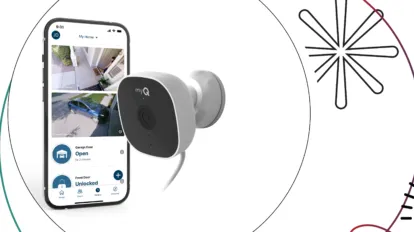
Unlocking the Power SmartSecure with the myQ Smart Outdoor Camera
New Solutions for Multifamily Access Control
10 Million myQ Connections and Counting...
Contact Us
If you're a member of the media and you'd like to get in touch with our Communications team, please fill out the form below.

