Matt Neff On The 5 Things You Need To Know To Create a Successful App, SaaS or Software Business
Originally posted on Medium.com
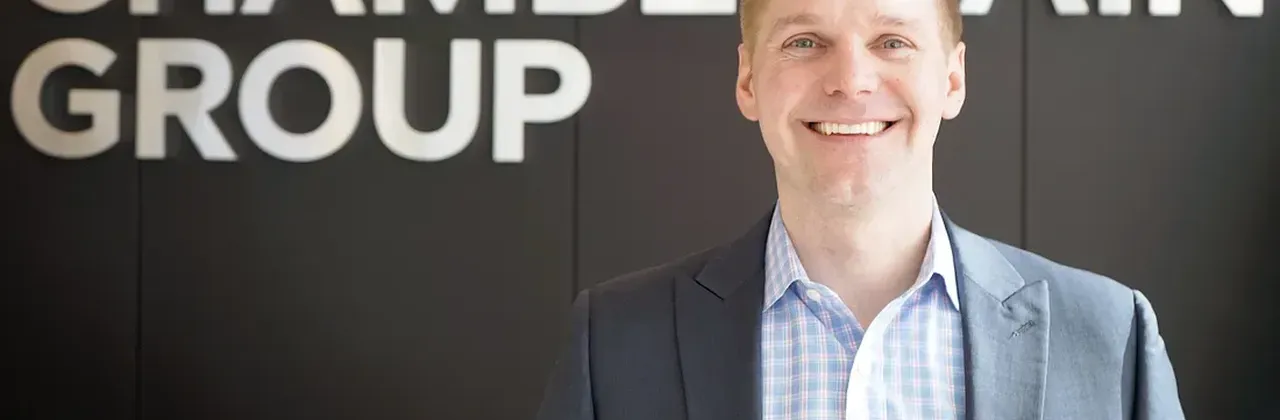
Matthew Neff is the Senior Director and General Manager for the myQ Enterprise business unit at Chamberlain Group. He leads the team that brings intelligent access to commercial warehouses and distribution centers, helping them address the access and logistics problems they face. Before joining Chamberlain Group in 2020, Matt helped launch two healthcare software startups and spent a decade at Accenture Consulting focused on sales optimization projects.
Thank you so much for joining us! Our readers would love to “get to know you” a bit better. Can you tell us a bit about your ‘backstory’ and how you got started?
I have always wanted my career to create an impact, which for me has meant building and launching something new. You can do that in a lot of industries; however I got my start by first joining an early-stage startup, and then using that experience to launch my own healthcare SaaS company.
When I was hired at the first startup, I didn’t yet have experience working in the fast-paced world of venture capital backed companies. While I was at business school, I had expressed my interest in SaaS start-ups and through a bit of luck was connected to a recent alumni founder by one of my advisors. He knew I was passionate about helping to grow something and had that “jack-of-all-trades” mindset required to succeed at a software. I met the founder and, as the opportunity sounded like a tremendous challenge, I took the offer the next week.
I spent two years growing that company from pre-revenue to Series A funding, before I started getting the urge to strike out and really start something on my own. With a friend, who I had met in the industry, we launched our own business, giving me the chance to truly grow something from the beginning and see it through. I spent the next two years truly grinding, spending each and every day on some of the most strategic items (closing sales, raising funding) and some of the most tactical (running payroll, paying taxes). After 2 years, I was spent.
I took a short break to re-energize, and when I looked for my next role, I wanted something that blended the aspects I loved about a start-up with a little less of the heartburn that comes with running your own company. I found this opportunity with the Chief of Staff role at Chamberlain Group. It was a revitalizing experience that combined the fast-paced variety I enjoyed from working at a startup with the balance of working for a larger and more established organization. Having the flexibility and space to work on so many different things in that position, with the stability of a global Blackstone Portfolio Company behind me gave me the energy and confidence to get back to building something again.
When Chamberlain Group was looking for someone within the organization who could take on and lead a SaaS start-up business, I knew I was ready. Earlier this year, we launched an internal SaaS startup, myQ Enterprise. It is an intelligent gate, dock, and yard management software, powered by connected access and loading dock equipment so facilities can streamline trailer scheduling, simplify driver check in, and receive real-time data about what is happening at their facility. It’s a different product than what Chamberlain Group has historically sold, which means that it’s new territory for us. However, since launching earlier this year we have experienced tremendous growth and see a ton of potential. I am excited to see where the rest of the year takes us.
Can you tell us a story about the hard times that you faced when you first started your journey? Did you ever consider giving up? Where did you get the drive to continue even though things were so hard?
The day-to-day stressors that come from running a startup and the daily challenge of trying to achieve growth goals, can be overwhelming if you don’t have a good grounding or an outlet. After two years at the startup that I helped launch, I was caught in a spiral, constantly asking myself questions like, “Are we going to have enough funding? Are we going to make payroll? Are we going to close the next sale?” The stress was eating me up inside. I started dreading signing on every day because of how I was handling the stress. I lost perspective and it took a toll on my ability to stay inspired about the business. Stress can be a motivator, but there’s a balance there, as it can cross into an unhealthy territory if you aren’t able to maintain boundaries.
I made the hard decision to take a break from the business and to resign, which in some ways felt like admitting defeat, but in others was really freeing. I needed to give myself space and take a “startup sabbatical” to regain perspective and come back stronger as a leader.
So, how are things going today? How did your grit and resilience lead to your eventual success?
Things are going well. I deal with the same sort of challenges I did at my previous start-up, but I am better at managing the pressures. I am giving myself permission to take a break and reflect. I have also focused on building a high-performing team, so I don’t feel that it’s all up to me to solve these problems. Does it still sometimes feel like I’m Atlas with the world on my shoulders? Sure, but I’ve learned ways to manage the tremendous level of work that goes into a business like this.
The biggest lesson I’ve learned is that you can’t do it all. If you want to succeed, you must rely on and trust your team. Hire inspired people so that you don’t trap yourself with the mentality that everything is riding on you as the leader. While to some extent this thinking is right, you must learn to extend that trust because there is just too much going on to micromanage things, even if you wanted to.
If you’re going to achieve success, you’ll achieve success together. You can’t try to do it all by yourself.
It has been said that our mistakes are our greatest teachers. Can you share a story about the funniest mistake you made when you were first starting? Can you tell us what lessons or ‘take aways’ you learned from that?
I have never loved the constant follow-up that is often required when you are getting near the finish line with closing a sale. I used to get it in my head where I would think of it the same way you do with dating, which it’s not. I’d agonize over scenarios like, “I’ve called three times. I shouldn’t call a fourth time because if I do then I’ll look too desperate? Right?” I would work myself up over finding the right moment to message someone back and I was spending more time thinking about calling a prospect versus actually calling a customer.
The truth is, it’s not dating. It’s business, and as long as you are polite and respectful, it really doesn’t hurt to be overly persistent. The worst thing that will happen from not following up with someone is you don’t get the sale. And if you don’t get it, who cares? If that means calling the person every single day, then you do it.
Just like with anything you want in life, you get to a point of if “I want this to happen, I have to make it happen,” and I can’t second guess myself and worry about what other people might think.
What do you think makes your company stand out? Can you share a story?
myQ Enterprise stands out from the competition and adjacent software players, because we are approaching the problem of inefficient facility logistics by designing solutions that fully automate the warehouse, versus just digitizing the existing process. For example, our customers can automate loading dock assignments and processes with meaningful data insights and be equipped with end-to-end visibility to transform their logistical operations.
While most customers aren’t looking to be nearly that automated yet, they are looking for solutions that reduce downtime, enable scale, and increase business predictability — while not adding any headcount. myQ Enterprise is able to do this because we built our software on top of Chamberlain Group’s best-in-class access equipment, automating the end-to-end onsite facility logistics processes.
One of the reasons that many businesses haven’t invested (or haven’t renewed) in this type of software is because the existing options are primarily digitizing the human interaction and aren’t providing enough ROI.
One of our early customers came to us after not seeing enough value with a competitor’s offering. Since going live, we have helped them to increase their daily throughput by 25%, without having to invest in any additional headcount. This increase results in several hundred thousand in annual value from our solution.
Which tips would you recommend to your colleagues in your industry to help them to thrive and not “burn out”?
There are three things I would recommend to colleagues that are trying to avoid burnout and find ways to thrive.
The first one is to build a strong team. I said this earlier in the interview, but you have to surround yourself with smart talented people that you trust and are willing to rely on for almost any task that needs to be done. This is hard, especially as the leader of a software business unit because you often feel that you have to do everything yourself, but nothing gets done in a vacuum, and you have to accept help to succeed and reach your goals.
Secondly, it is important to find a mentor. Pick someone who has done this before or who is doing this right now so you can talk to them about the challenges that you have. Having and sharing this perspective is really helpful. I talk to someone who’s running a startup right now, as well as someone who has already done it, and having that sounding board helps me tremendously.
The third thing is to ruthlessly prioritize. There are millions of things you will do that will be important, and this goes for any role, but especially here. If you aren’t able to prioritize down to the one or two things that need to be achieved this year, quarter, or month then it is very easy for the team to start moving in different directions. Everyone is trying to solve the problems in front of them but if they are solving different problems, or optimizing for different reasons then it is going to very quickly lead to chaos and lost time.
Additionally, it is important for team morale to make sure that you celebrate the milestones along the way. It’s so easy to hit a major milestone and already be thinking about the next goal. Instead, take the time to intentionally celebrate accomplishments and acknowledge how far you and your team have come.
None of us are able to achieve success without some help along the way. Is there a particular person who you are grateful towards who helped get you to where you are? Can you share a story?
One person who I am particularly grateful to for my career journey is Robert Gertner. In addition to being one of my professors when I was at The University of Chicago Booth School of Business, he is the one who made the initial introduction to my first start-up and started me on this career path. He is the reason I am where I am today.
Outside of just making the introduction, Rob and I connected monthly to check-in and see how I was adapting to my first start-up life. He offered me guidance and acted as a sounding board. In addition to having had been so influential in launching my career, I also look to him as a role model, as someone who is focused on connecting people. I have made that a priority for myself to connect others — even if it is to my own short-term detriment — and to offer people the best opportunities possible.
Ok, thank you for all that. Now let’s shift to the main focus of this interview. Approximately how many users or subscribers does your app or software currently have? Can you share with our readers three of the main steps you’ve taken to build such a large community?
We officially launched myQ Enterprise this February. While we had a few alpha customers prior to this date, it is in effect a brand-new business. This year already we have signed up multiple facilities and have had more than 800,000 trucks use our software to check-in to a facility and to access a dock.
What is your monetization model? How do you monetize your community of users? Have you considered other monetization options? Why did you not use those?
We charge an annual subscription per facility. The subscription amount can vary based on the size of the facility and how much traffic the facility experiences. Bigger, busier facilities, have a larger subscription.
One other monetization approach that we have considered is a shared savings model. Our software generates significant ROI for our customers. We have explored a model where we align on the measurements with our customer, then annually measure the value created by the software, with CG receiving a percentage of the shared savings. Before offering this subscription option widely, we would like to have more customers and more data to feel that we can appropriately measure the value generated from our solution.
Based on your experience and success, what are the five most important things one should know in order to create a very successful app or a SaaS?
- Have a Clear Value Proposition: The number one and most important thing you must do to create a successful SaaS business is to have a clear value proposition for your solution that you can explain in under thirty seconds. You must be able to explain what your app/software does and how it solves a real user problem. If you are unable to do this then you aren’t going to be able to effectively communicate to customers, investors, or to your team. The best ideas have very simple value propositions — take Airbnb, “provide travelers with affordable and unique accommodations” — with just seven words they communicate what they are and how they stand out.
- Ruthlessly Prioritize: Second, as I mentioned previously, you must ruthlessly prioritize where you spend your time. This means that there need to be lots of things that you and the team don’t do. Prioritization doesn’t mean that there are things that you will do when you have time. It means that there are things that you won’t do at all. Steve Jobs consistently asked his team, “what have you said no to lately.” This is a helpful question to keep in mind and push your team on. You should choose one or maximum two goals for your team. As an example, this year, our priority is to contract with a specific number of customers. It is not to meet a specific amount of revenue or prepare for a specific scale or shorten the onboarding time, or plenty of other things which are also good goals. It is solely to sign customer contracts. Ruthlessly keeping this focus allows the team to make the right tradeoffs to hit the goals for your business.
- Build a Team You Trust: Third is that you must recognize that the only way to grow a company is to build a team that you trust and extend trust for them to make decisions. To grow anything of meaningful size will not be achieved by a single individual. You must have a team with you that understands what is trying to be achieved, is aligned to that vision, and will do everything that they can to achieve those same goals. To supercharge a startup and get over capacity constraints is to hire a great team and then empower them to make fast decisions.
- Consistently Conduct Retrospectives: With startups and software companies, you are naturally going to be trying things or doing things for the first time. This creative problem solving leads to lots of freedom. However, one thing to remember is that after something goes well, or when something goes poorly, that you bring the team together to consistently go over what happened and how we can either standardize to a new process or try something new.
- Constantly See Ways to Renew Your Sense of Creativity: Give yourself the space needed to maintain that sense of creativity and passion that first got you started. It’s easy to get caught up in the day-to-day grind but having that ability to disconnect and renew your perspective from time-to-time will make you a stronger leader in the long run and allow you to continue to look at things from a fresh perspective.
You are a person of great influence. If you could start a movement that would bring the most amount of good to the most amount of people, what would that be? You never know what your idea can trigger. :-)
I would focus on healthcare reform. I’d love to get more people thinking about how we can lower costs of healthcare in the United States while still delivering high quality care and important medical research. I think if we could provide everyone with healthcare of that caliber, then our country would be a healthier and better place.
How can our readers further follow your work online?
You can follow me on LinkedIn. For more information and news on Chamberlain Group, please visit chamberlaingroup.com. To learn more about our startup business, myQ Enterprise, visit myq.com/myqenterprise.
This was very inspiring. Thank you so much for joining us!
Related Insights

Remembering Colin Willmott

Code & Cadence with Jason Givens

myQ at CES 2023
Contact Us
If you're a member of the media and you'd like to get in touch with our Communications team, please fill out the form below.

